

The crisis of Egyptian capitalism, and the ruling class’s IMF gamble
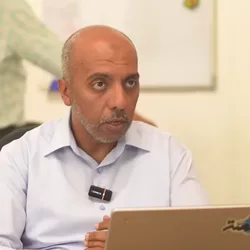
The opening of Egypt Forum 2026 was a striking sight: the country’s political leadership and its business class gathered in one room, what political scientists would call a “ruling class.” More than once during the forum, that elite voiced anxiety about a range of threats to the economy’s stability.
Strangely, days of discussion never produced a proper accounting of Egypt’s experience with the International Monetary Fund, or an answer to whether it had shored up that stability or undermined it. What did come through, from one speaker after another, was agreement on a single point: Egypt “after the IMF” would enter a new era, one that demands a different idea of how to govern.
We rarely realize we are at the end of an era until years after we have left it. This forum may one day look like the final scene of ten years with the IMF: the ruling class assembling to tally what it had won and lost in the brutal restructuring the world’s most prominent international lender imposed on Egypt, and to draw up a new vision for living with the result.
This article rereads those ten years through the balance of power between the IMF and the ruling class, in both its political and its capitalist wings.
Economic opening, 2016–2021
My passion for economic history keeps pushing me to ask why the 1970s are remembered as the age of “opening” (infitah), when so much of Nasserist policy lived on straight through them. Most likely the label belongs to moments when a state openly announces a change in its economic identity. But turning a ship takes longer than declaring a new heading, and a head of state’s declaration does not mean the rest of the elite agrees with him. Such periods tend to bring arguments and infighting within the ruling class, until a broad consensus emerges on how to run its interests in the new era.
The years 2016–2021 may have resembled the seventies in mood, but this time the liberalization was neither commercial nor investment-driven. It was an opening onto the global financial system, a process whose first stirrings go back to the 1990s.
The opening scene of this iteration rolled out with the 2016 press conference of Tarek Amer, then-central bank governor, who set out to present the shock float of the pound as the prelude to a new policy that would correct the mistakes of the past. Smiling calmly, he sold a jump of about five pounds to the dollar, in one leap, as a new social contract that would give everyone something: the global financial system, from the ratings agencies to the hot-money investors; the domestic private sector; and bank savers, his own wife among them. “Even my wife is happy,” he told a reporter who asked. “Her deposit’s making money!”
Reality was less tidy. The package of policies the state adopted amounted to a declaration of financial dependency, after lean years in which the monetary authority had tried to resist such dependency until it buckled under a shortage of foreign currency. By dependency I mean monetary policy geared above all to attracting inflows from abroad rather than to serving domestic development. Amer’s float is a clear example: it raised input costs for local producers, whether they sold at home or abroad, and lowered the cost of Egyptian debt for the foreign financial investor.
The same goes for the interest-rate hikes, or monetary tightening, used to contain the float’s inflationary effects. For the foreign investor, a high rate means a bigger return on Egyptian debt; for the local producer, a heavier cost on bank loans. In the months after the float, leading manufacturers voiced their shock at interest rates, but the loudest voice belonged to the global financial system.
We still do not know how the ruling elite arrived at an internal consensus on the 2016 shock float. The likeliest explanation is that everyone saw it as a stopgap maneuver with the IMF, to last until the crisis passed.
But nothing is as permanent as a temporary fix, and with the Russia–Ukraine war it became a reality no one could avoid. A conflict between two of the world’s largest producers of food and energy set off a global wave of inflation that reached the advanced economies. That pushed the largest economy in the world, the United States, to raise interest rates sharply, and developing countries faced two crises at once: an exodus of hot money and the rising cost of international borrowing.
Egypt escaped neither. The hot money Amer had boasted about only a few years earlier became a stigma. In May 2022 the prime minister made his now-famous statement that $20 billion in hot money had left since the start of the year; a former finance minister later voiced regret over the heavy reliance on it; and that August, Amer left the central bank.
With that, the ruling elite lost any chance of backing away from the opening whose first steps it had taken. The moment came on the back of an earlier crisis, the fallout from the COVID-19 pandemic, which had landed us in more than one financing program with the IMF. From then on, the IMF’s presence looked less like emergency help than a long stay.
A game of chicken, 2023–2024
The opening frame of the second phase of the IMF era was the Finance Ministry’s issue of international bonds in February 2023. The yield was a shock, close to 11%, very high next to the usual rates on this kind of offering.
The shock did not come from nowhere. The offering followed repeated US rate hikes through 2022 to the highest in years, which pushed the global economy into a new phase of monetary tightening. The high yield foreign investors demanded on Egyptian bonds reflected two things: their reluctance to hold emerging-market debt when they could buy American debt, and their judgment that economies like Egypt’s had become riskier in a tightening environment of this kind.
Egypt met the high cost by withdrawing from the international bond market altogether, returning only in early 2025. That withdrawal is what the media came to call the “dollar crisis,” and it probably changed a good many of the ruling elite’s basic notions of stability.
Before that crisis, heavy external borrowing was not a central issue in the IMF’s reviews. Spending on the New Capital and El Alamein, and on the infrastructure serving them, never halted any of the IMF’s successive programs.
By 2022, debt had become the stigma of the era’s policies, with external debt more than double its level ten years earlier. The crisis deepened as US monetary tightening made foreign currency ever harder to find, and that led to a new agreement with the IMF in December of that year.
It was the fourth agreement since 2016, but it differed from the rest: the authorities made many sacrifices to meet the IMF’s hard-line neoliberal conditions, chief among them ending the central bank’s generous subsidy for industrial loans, the program Amer had launched to compensate industrialists for the high interest rates of earlier programs. It was not enough.
The IMF’s main demands at this point were a fully free exchange rate, with no central bank intervention; a broad program of selling off public assets; and curbs on investment by state-owned companies, the armed forces’ among them. Businessmen like Naguib Sawiris had voiced concern about competing with those companies, a concern that matched the IMF’s view that growth would come only from private-sector investment.
The authorities could meet none of these latest demands. Even privatization looked impossible amid the dollar crisis, which put a fair valuation of the assets out of reach. The state answered criticism of its expanding role by passing a law ending tax privileges for any public entity, though with little fuss about what it would mean in practice.
Faced with this sluggish response, the IMF postponed the reviews of its financing agreement indefinitely, an open declaration that a game of chicken had begun. Freeze the agreement and a credit-rating downgrade would follow almost at once, raising the cost of Egyptian debt because investors priced it as a high-risk asset.
The sins of the new opening
The dollar crisis alerted the authorities to the fact that foreign-currency risk threatened many interests of the ruling class, in the broadest sense of the term. An unstable exchange rate, for instance, made real estate contracts hard to price, and they began to include clauses raising the price of the unit during the installment period if the dollar rose. Then came the difficulty of importing basic goods, such as inputs for the big factories, to say nothing of the risk of being unable to secure the staples that keep society stable.
At this point the authorities realized, perhaps belatedly, the risks of opening up to the global financial system. Transport Minister Kamel Al-Wazir, one of the officials most responsible for external loan agreements, began telling the media about efforts to localize the industries tied to his ministry’s major projects instead of importing them, and local firms like Siegwart were bailed out so they could make railroad ties for the high-speed train rather than have them brought in from abroad.
Elsewhere, the authorities tried to enlist Egyptian businessmen such as Ahmed Ezz and Hisham Talaat Moustafa to carry out the privatization program, at a moment when government and Egyptian capitalism had a common interest, the dollar crisis having hit the latter hard.
Even so, this solidarity between government and business was not enough to break the deadlock or satisfy the IMF. The crisis eased only with what the prime minister called the “grand deal” with the UAE in February 2024, which brought in enough foreign currency to cushion the shock of the big float in March 2024.
Entrenching the IMF
This time the intention was to float the pound fully, a defining feature of the new opening’s policies. With the artificial peg having held for so long, the central bank had to stand by while the dollar rose more than three times as far as it had in 2016.
March 6, 2024 thus became one of the worst memories for Egyptians, who saw the crisis play out beyond anything they had imagined when the official dollar rate at banks went past 50 pounds.
That sacrificial offering was enough, this time, to bring the IMF back and restart the reviews of its program. It came with a few measures: a cap on all government investment, including the public economic authorities, the main source of the state’s mounting external borrowing; an announcement of the revenue from taxes imposed on bodies such as the armed forces’ clubs and the New Capital; and later, groundwork for privatizing a stake in the army-owned Wataniya fuel stations.
With the IMF’s program due to end this year, everyone is pretending it succeeded: the government, the IMF and the business community. Even Moody’s recently celebrated how much better placed we are to offer hot-money investors a low-risk environment.
The truth is that no wing of the ruling class sees in the new open climate a setting that protects its productive interests, or the stability the economy once enjoyed.
To judge the IMF’s record in Egypt, we have to go back to the purpose it was founded for after World War II: correcting imbalances in its members’ external accounts. That has not happened in Egypt.
True, the current account deficit has narrowed a little over the past ten years, but it has never moved back into the surplus of earlier periods, as the chart below shows.
The reason, quite simply, is that the IMF spent all those years focused on phasing out energy subsidies as the way to cut that deficit. In practice, higher energy prices did not push citizens to ration their consumption sharply, because it was essential consumption, not luxury. The way to cope with our growing imports was simply to tip the other pan of the scale, exports. Yet across our experience with the IMF, exports grew only modestly, and industry was choked by the cost of financing.
The next chart shows gross capital formation falling as a share of GDP while financing costs and interest rates climbed. This indicator measures what an economy spends in a year on adding assets that will be used in production later, such as buildings and construction, machinery and equipment, and inventories. It is entirely different from investing in stocks or bonds.
Even on the monetary indicators that take up so much room in the IMF’s discourse, partly to draw attention away from the others, the exchange rate is not stable at the moment. Since the March 2024 float, the pound’s volatility against the dollar has been more than double that of an index of emerging-market currencies, a situation that worries producers, traders and consumers alike.
There is no doubt that other wings of the ruling elite have profited handsomely from the policies of recent years. Hassan Allam’s remarks at the Egypt Forum are one example: the workforce of his company grew from 3,000 to 50,000 thanks to the state’s part in building infrastructure. But such firms, too, are anxious about exchange-rate risk.
Even the state-capitalist wing seems hesitant about the privatization the IMF urges. That was plain when the Damietta and Port Said container companies were listed on the stock exchange and their privatization then frozen, and again when the state turned down insistent requests from Abu Dhabi Ports to buy another stake in Alexandria Container.
The ruling class is trying to live with this new era in more than one way, but the solutions remain inadequate. The state, for instance, is working to deepen domestic industry so that the economy can stand more independently, now that this class has lived through the nightmare of exchange-rate swings during the dollar crisis.
A new industry minister from the business world, Khaled Hashem, took over the portfolio a few months ago. At the Egypt Forum he complained that licenses remain hard to obtain. The fund he set up to support struggling factories stands at only one billion pounds, a figure that looks tiny next to the sector’s needs, while monetary tightening still weighs on the cost of bank financing for industry.
Egypt’s long experience with the IMF, then, reveals sharply contradictory results. The wings of the ruling class that manage wealth made clear gains from Egypt’s integration into the global financial system, or in other words from lower risk on financial investments. But the IMF leaves Egypt, its economy and the interests of local capitalism acutely exposed to external shocks like the recent war on Iran. It is no wonder this elite feels the anxiety it voiced at the Egypt Forum.