

Ghassan Al-Dahini and the recycling of chaos in Gaza
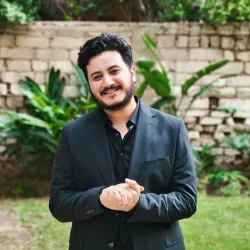
In a carefully staged scene amid the rubble of Rafah, Ghassan Al-Dahini appeared flanked by masked gunmen and surrounded by weapons, projecting an image of authority. Dressed in military uniform, he inspected a formation of fighters, positioning himself as the successor to Yasser Abu Shabab, the commander of the group known as the “Popular Forces,” who was recently assassinated.
That image of command obscures a far more complex and turbulent personal history. Israel is betting on Al-Dahini to fill a growing security vacuum in southern Gaza, while Hamas has placed him on its wanted lists. According to biographical information and security records, his path has cut across multiple and often opposing institutions: he began as an officer in the Palestinian Authority’s Preventive Security, later fought in the ranks of Al Qaeda–linked groups and ISIS, before emerging as an operative accused of working in alignment with Israeli intelligence objectives.
Al-Dahini’s rise encapsulates a central paradox in Israel’s “day-after” scenarios for Gaza. Rather than constructing stable governance structures, the approach relies on repurposing figures with violent and extremist pasts, recasting former ideological enemies as local proxies in a gamble that critics warn could push Gaza toward an internal armed conflict layered atop an already devastating war.
A biography of fragmentation
Al-Dahini was born in October 1987 in Rafah into the Tarabin tribe, the same extended clan as Abu Shabab. He grew up in modest circumstances and completed secondary school with a low grade average. According to information he has posted on Facebook, he joined the Palestinian Authority’s security services before 2007, before later affiliating with Jaish Al-Islam, a Salafi-jihadi group founded in Gaza between 2005 and 2006.
The group aligned with Hamas until their split in 2007 and has since been led by Mumtaz Doghmosh, who is designated by the United States as a terrorist and is known for the kidnapping of British journalist Alan Johnston. During the Mubarak era, Egypt’s former interior minister Habib Al-Adly accused the group of carrying out the 2010 bombing of the Two Saints Church in Alexandria, an allegation the group denied at the time.
Al-Dahini’s shift from security officer to militant was not the final turn in his trajectory. Gaza security records link him to smuggling networks and to coordination with ISIS’ Sinai Province to carry out attacks in Egypt’s Sinai Peninsula. He was later expelled from these groups over what the records describe as serious allegations of misconduct and was subsequently arrested by Gaza security services in 2020 and again in 2022 on criminal charges.
His personal life has also been marked by instability. He is separated from his wife and three children, and in 2018 his jailed brother committed suicide. Those personal ruptures, combined with social ostracism from his tribe and a demonstrated ideological flexibility, left Al-Dahini politically isolated.
Security analysts say such profiles are often viewed by Israeli intelligence as susceptible to recruitment, offering a channel through which resentment, revenge, and the promise of renewed authority can be mobilized.
As part of its effort to weaken Hamas during the 2023–25 war, Israel began drawing closer to the Doghmosh clan.
Engineering local alternatives
In March 2024, the Israeli military proposed arming the clan to challenge Hamas’ rule under the banner of securing humanitarian aid convoys. This later evolved into a pilot project for food distribution in eastern Rafah. The Israeli newspaper Maariv reported that Israel’s domestic security agency, Shin Bet, recruited Abu Shabab’s group as part of the project, and that its chief, Ronen Bar, advised PM Benjamin Netanyahu to arm and deploy the group.
Netanyahu has since acknowledged that his government armed Palestinian clan-based groups opposed to Hamas, describing the move as an effort to create a “local alternative” to the movement’s eroding authority. According to Israeli and Palestinian sources, Al-Dahini was tasked with recruiting covert agents to help counter Hamas’ control over aid distribution.
Alongside allegations tying Al-Dahini to work on Israel’s behalf, several reports have also linked him to the UAE, citing funding and financial support for the Popular Forces. Al-Dahini appeared in at least two photographs taken inside the camp, standing beside a white vehicle bearing Emirati license plates. One of the images circulated on TikTok on June 15, 2025.
At the time, Al-Dahini was serving as head of the Counter Terrorism Service affiliated with the Popular Forces. The unit’s insignia closely resembles the emblem of a Yemeni group carrying the same name, which was established with support from the UAE in early 2024.
New formations
Gaza has long been dominated by traditional factions of different ideological stripes, including Hamas, Islamic Jihad, Fatah, and the Popular Front for the Liberation of Palestine, which have largely maintained cohesion on the battlefield against the Israeli military.
In 2024, however, new armed entities with a clan-based and local character began to emerge. These formations, widely classified locally as Israeli-backed forces, include the Popular Forces led by Abu Shabab, the “Strike Force” led by Hossam Al-Astal, and other groups led by Ashraf Al-Mansi and Rami Helles.
Their emergence has been widely interpreted as an attempt to engineer local security alternatives capable of filling the current vacuum and competing with established factions.
Al-Dahini has sought to establish what he calls a “demilitarized zone” east of Rafah near the Karm Abu Salem crossing, which Israel currently allows as the sole entry point for humanitarian aid into Gaza. He presents the area as a safe space for civilians who “believe in peace,” while calling for the disarmament of Hamas and other clans.
A harder-edged successor
While Abu Shabab was widely viewed as a fugitive drug dealer operating under Israeli protection, Al-Dahini has sought to frame himself as a political figure and ideological adversary of Hamas. That self-image appears to have fed leadership ambitions even while Abu Shabab was alive, as Al-Dahini leaned on seniority and experience within armed groups.
After Abu Shabab was killed, Israel’s Channel 12 moved quickly to present Al-Dahini as a more “brutal” replacement. In his first interviews with Israeli media, Al-Dahini openly aligned himself with Israeli objectives. “How can I be afraid of Hamas when I am fighting it?” he said. “I arrest its men and confiscate its equipment. We are preparing a demilitarized area for civilians.”
Those statements place him squarely within the framework of “security bubbles,” an Israeli plan to create administrative pockets in Gaza governed by clans or local militias operating outside Hamas or Palestinian Authority control. In June, Israel’s Institute for National Security Studies said Al-Dahini was “responsible for recruiting covert agents to help confront Hamas’ control, under the supervision of the Israeli army.”
What is alarming is the level of violence Al-Dahini has displayed publicly. Documents and firsthand testimonies obtained by rights organizations and journalists link him to alleged field executions of civilians from the Abu Sunayma family in Rafah. According to those accounts, he also posted images described as “shocking,” echoing practices associated with ISIS at the height of its brutality.
The acts, carried out under the cover of Israeli military operations, have been described by observers as implicating both the Popular Forces and Israeli units in actions amounting to war crimes.
The digital campaign against Hamas
Although his Facebook account was only launched in February, it has become a high-volume platform for hostile messages to Hamas and other armed Islamist groups. Around 40 videos captured collectively more than one million views.
He consistently attacks Hamas and adopts Israeli narratives, including claims that Hamas uses schools as military bases and praise for assassinations targeting its members. One post shows Ahmed Yassin, Khaled Meshaal, and Hassan Nasrallah under the caption “the Iranian project’s lackeys in one picture,” followed by insults and calls for “stability” and an end to what he describes as “Persian, Rafidite guardianship” over the Palestinian cause.
In another post, he shared an image of Mohammed Deif with the word “infidel”, describing him as “the one-eyed Dajjal,” a figure associated in Islamic tradition with the false messiah.
“Not one of us”
Despite Israeli attempts to frame the militia as rooted in the Tarabin tribe, tribal leaders moved quickly to reject that narrative. In multiple statements, Tarabin elders publicly disavowed Abu Shabab and Al-Dahini, withdrew tribal cover, and called for accountability.
While Hebrew media reported that Abu Shabab and others were killed in an ambush by Hamas in Rafah, the Tarabin tribe in Gaza said his killing by young men from the tribe marked “the end of a black page that does not reflect the tribe’s history or its steadfast positions.”
The tribe said the blood of a man who “betrayed the covenant of his people and became entangled with the occupation” closed “a page of shame” that the tribe worked to erase “with its own hands and with its clear position.”
That rejection has left Al-Dahini and his militia in deep isolation. Lacking a popular base, they rely for survival on temporary Israeli protection. Abu Shabab’s killing also shook morale as fighters realize they are expendable. Some, according to local accounts, began considering turning themselves in to Hamas, fearing a sniper’s bullet or the sudden withdrawal of Israeli cover.