

Three years on: Reflections from Hamas’ grassroots in Gaza on Al-Aqsa Flood
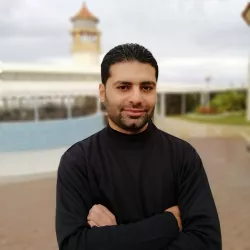
Mohamed Al-Sharif, a Hamas local-government official in Rafah, remembers the morning of Oct. 7, 2023. As he was getting ready for work, and his children for school, rockets were launched from the Strip, heralding the start of the Al-Aqsa Flood attack on the settlements of the Gaza envelope.
As news and images arrived, the spectacle of October 7 stirred in Mohamed a sense of dignity and the satisfaction of vengeance, particularly as Palestinian resistance fighters broke through the border fence and security barriers and captured Israeli soldiers.
Yet even as Mohamed felt the exhilaration of victory, like tens of thousands of Gazans who took to the streets in celebration, he knew from the very first hours that this moment would not last and that the Israeli response would be harsh.
Today, three years after October 7, the effects of the fateful decision taken by Hamas’ leaders are still playing out in the political dislocations that followed and in the enormous losses the Palestinians suffered during the years of war. Debate continues within Hamas’ grassroots base in Gaza over what the decision achieved and the consequences that flowed from it.
Al-Sharif is one of six Hamas members in Gaza asked by Al Manassa whether the October 7 decision had been worth it—a question now being raised across all levels. Two of the six declined to speak at this time.
The remaining four accounts do not necessarily represent the stance of the movement’s grassroots base, but they reveal how, after three years of war, a conviction that an existing reality had to be broken can coexist with somber reflection on the price paid and the results achieved.
No regrets, despite the losses
The resistance factions’ attack on the Gaza envelope, which left some 1,200 Israeli soldiers and settlers dead and saw another 251 taken captive, was followed by Israel’s genocidal war that lasted nearly two years and claimed the lives of more than 74,000 people and wounded 175,000, not counting the missing and those who remain under the rubble.
Mohamed lost his wife and their unborn child, in the last month of her pregnancy, in an Israeli strike that targeted her family’s home. More than 17 members of his family were killed in separate strikes, while others died of illness without access to hospital care. His home, his office, and other property were destroyed. Yet even as casualties mount from near-daily Israeli bombardment across the Strip to this day, he stands by the October 7 decision just as he did on the first day.
The Hamas member places the events of October 7 within a longer history of conflict that, for him, begins with the Palestinian Nakba in 1948 and runs through the First Intifada in 1987 and the Second in 2000, and the Israeli wars and military operations in the West Bank and Gaza over the past two decades.
From this perspective, he does not see the Al-Aqsa Flood as having created the conflict; rather, it was a stage in a struggle that has existed for decades. He also believes that the repercussions of the event go beyond Gaza, shaping debates in many countries and altering Israel’s image among sections of Western public opinion.
That does not mean the war changed nothing, as Al-Sharif tells Al Manassa. Speaking from inside the tent to which he was displaced with the surviving members of his family, he acknowledges that those who lived through the slaughter, displacement, loss, and starvation may view the decision differently.
Still, he distinguishes between differing with the resistance on certain views and working against it, regarding disagreements within society and the movement as natural given the sheer scale of human and material losses citizens have paid and continue to pay.
The war seen from the balcony
Amira Al-Nahhal recalls the morning of October 7 from the window of her home as she was getting ready to go to the school where she works. At first, she did not know what was happening, and moved from window to window trying to tell the rockets launched from Gaza from those launched by Israeli aircraft. But something seemed different this time.
Gaza was not on the receiving end of the strikes; it was taking the initiative. As clips arrived showing Palestinian resistance fighters breaking through the border, Amira says her sense of pride overcame her fear of an Israeli retaliation that she knew would be colossal.
Three years on, Al-Nahhal, a Hamas organizer, still views October 7 as a “historic explosion” by a people against whom, as she describes it, all avenues of containment and subjugation had been exhausted. At the same time, she does not ignore the scale of the cost and the consequences that followed, which citizens in Gaza continue to endure.
Today, Amira’s home in Rafah no longer exists. She has lost many relatives, friends and colleagues. The educational institutions where she worked have stopped operating due to bombardment and destruction. Even so, she does not measure the event by losses alone. She believes the question that must be asked is: What has changed after all this spilled blood? Did October 7 return the Palestinian cause to a position from which there can be no return to the status quo ante?
The Hamas organizer approaches these questions with guarded optimism. She points to how October 7 thrust Palestine back to the center of international debate after the cause had slipped down the global agenda into a deferred issue, even as the occupation, settlement expansion, and the blockade pressed ahead. In her view, October 7 broadened pro-Palestinian popular movements, returning the cause to Western campuses, streets, and trade unions, while sharpening debate over Palestinian statehood and the two-state solution.
Yet she places a clear caveat on this reading, telling Al Manassa that the humanitarian catastrophe in Gaza cannot be overlooked, and that a definitive judgment on an event of this scale may take years, “because major events are not measured solely by what they produce in their moment, but by what they reshape in the years that follow.”
From pride to reckoning
Majed Nabulsi(*), 58, was asleep in his home in Gaza City on the morning of October 7 when the sound of explosions woke him and his family.
The Hamas member, who used to work in commerce, tells Al Manassa that he saw “heavy volleys of rockets heading out of Gaza,” before learning that fighters had crossed the border and taken Israelis captive.
Majed’s feelings in those early hours differed little from those of most of his neighbors, all gripped by a mix of joy and pride after years under the blockade and the conditions imposed on them.
Yet that feeling quickly dissipated. “Within hours, after the Israeli bombardment began targeting high-rises and destroying them completely, we understood that the consequences would be catastrophic,” he tells Al Manassa, adding that in that moment he had not anticipated the destruction would later reach what he described as “the complete destruction of the whole Strip.”
Over the three years that followed, Majed lost relatives, among them cousins, women and children; his home was destroyed, his business lost, and his merchandise stolen; and he, his wife, his children, and his brothers’ families were displaced from Gaza City to the south of the Strip. Yet despite all the destruction to the Strip, nothing has changed.
The Hamas member emphasizes that the push to alter reality did not start on October 7. He points to debates within his circles in the movement over the need to change the Strip’s catastrophic conditions, while confronting settler actions in the West Bank, settlement expansion, and the Judaization of Jerusalem and the Al-Aqsa Mosque.
At the present moment, however, he does not see that pressure on any of these fronts has abated. “All of that, after three years of genocide in Gaza, has neither abated nor stopped. In fact, it has escalated to an unprecedented degree.”
Unlike the answers of those before him, when I ask Majed for his assessment today of the October 7 decision and whether it was worth the price paid by Palestinians, he answers plainly: “I don’t believe October 7 achieved the results we wanted or hoped for.”
He notes that living conditions in Gaza are desperate and the economy is in ruin. Even businesses whose proprietors attempted to restart them have faced, according to him, obstacles caused by restrictions on the entry of goods under the pretext that some are what Israel describes as “dual-use.”
He also speaks of the Palestinian prisoners file, noting that some of the prisoners released in exchange deals were either rearrested or deported outside Palestine, while the occupying state detained thousands more.
According to data from Palestinian prisoners’ organisations, the number of Palestinians held in Israeli prisons reached around 9,350 prisoners and detainees at the start of September 2026, compared with 4,935 before the war, according to a report by the organisation B’Tselem based on Israeli Prison Service figures.
Inside the movement, Majed says discussions did take place between cadres and members over the decision and its outcomes, but they never led, as he describes it, to an organizational review or new policy: “There are discussions, but they never go beyond venting and emotional release among ourselves. There’s no discussion aimed at taking decisions, or at building on it so that the movement’s leadership can take decisions.”
Unavoidable choice and the cost entailed
Hamas grassroots cadre Mahmoud Haniyeh has a somewhat different perspective on the Al-Aqsa Flood. For him, October 7 was not so much an elective Palestinian choice as a matter born of necessity, linked to a prior political context: efforts to resolve the Palestinian refugee file, the Judaization of Jerusalem, Arab-Israeli normalization, and what he describes as prior warnings of an explosion in the situation issued by the former head of Hamas in Gaza, Yahya Sinwar.
Haniyeh’s reading of the war decision does not come from the position of an onlooker, but from a brutally harsh reality. Just days before speaking to Al Manassa, he recovered the bodies of his wife and his only child, Obeida, after they had lain for nearly three years under the rubble following an Israeli massacre that claimed the lives of more than 400 Palestinians. He also lost his home and his workplace to Israeli bombardment.
Even so, this brutal personal ordeal does not lead him to reject the decision, even if the question of cost now lies at the very heart of what he has to say: Should Gaza alone bear the burden of the Palestinian cause?
More than five times during the interview, Haniyeh reaffirms that Hamas’s move on October 7 was a decision born of “necessity,” one it was driven to make after options and warnings were exhausted and the Israeli blockade continued. Even so, he does not ignore that “the price Gaza paid is far beyond its capacity, and greater than the price of October 7, but our leadership had no options.”
He qualifies: “The evaluation of October 7 cannot end at direct military outcomes, because the repercussions remain open for the region and for the Palestinian cause itself. The Palestinian people, wherever they are, must rally their strength to help shoulder the staggering price Gaza has been paying over all these years.”
Of course, the bleak conditions endured by the people of Gaza leave no room for a genuine reckoning with an event whose aftermath they are still living through. They have neither the luxury nor the time to debate a matter of such gravity. Queuing for water, securing food, and keeping a tent over his family are all that occupy Mohamed Al-Sharif right now; he has neither the time nor the capacity to pass final judgment: “I can’t judge the Al-Aqsa Flood from the results I’m living with. The sword is still at my neck, to this day.”
(*) Pseudonym at the source’s request.