

Right to arms: What tipped the scales for Khalil Al-Hayya?
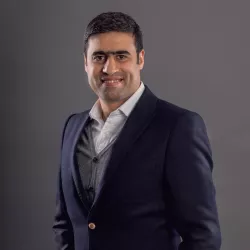
Hamas has brought an end to the longest presidential vacuum in its history, announcing on July 20 the election of Khalil Al-Hayya as head of its political bureau, succeeding Yahya Sinwar, who was assassinated by the Israeli occupation army in October 2024. Since Sinwar’s assassination, the movement’s affairs had been entrusted to a temporary leadership quintet, composed of senior regional leaders—an exceptional arrangement that lasted nearly two years.
Al-Hayya assumes the headship of the political bureau at one of the most fraught moments for Hamas since its founding: Gaza lies in ruins awaiting reconstruction, the second phase of the ceasefire agreement is stalled, international demands for disarming the resistance are escalating, and pressure is mounting to remove Hamas from managing the Strip.
In the West Bank, incursions and settlement expansion continue unabated, without Palestinians succeeding in repairing their internal division.
Regionally, Hamas no longer possesses the political rearguard that once backed it in negotiations or blunted external pressure; most Arab capitals involved in the file now treat the movement as a problem to be managed rather than a political ally.
Amid these conditions, Hamas’s Shura Council selected Khalil Al-Hayya—born in Gaza in 1960, one of the movement’s most prominent leaders hailing from the Strip, and among the most influential within its external leadership in recent years.
Al-Hayya’s career
Al-Hayya served as a member of the Legislative Council and head of Hamas’s parliamentary bloc, later becoming deputy head of the movement in Gaza alongside Yahya Sinwar, before managing the Arab and Islamic relations portfolio from his residence in Qatar.
Following the assassination of several top-tier leaders—most notably Ismail Haniyeh and then Sinwar—his profile expanded as the primary face of the movement’s delegation in negotiations to halt the genocide in Gaza, combining proximity to the Strip’s leadership with experience in managing negotiations from abroad, alongside his membership in the quintet committee that managed the movement’s affairs since October 2024.
The stumbled path that brought Al-Hayya to the post reveals the fragility of the movement’s position as much as it reveals the messages behind his selection. Marked by appeals against Gaza’s internal elections, two rounds of voting, and a sharp division between two factions over the future of weapons, governance, and relations with Iran and Arab capitals the choice of Al-Hayya has a lot to tell.
For the podium, and for the table
Al-Hayya did not leave his priorities to analysts to interpret; he mapped them out himself in his inaugural address on Wednesday, July 22, arranging what he termed a “set of priorities” across six consecutive points.
At the forefront was a comprehensive cessation of aggression and securing a full withdrawal of Israeli troops from the Gaza Strip, followed by restoring a dignified human life and accelerating reconstruction; which he stressed was an inherent right of Palestinian people, neither a gift nor a favor from anyone, and one that cannot be linked to any trade-offs, concessions, or political stances.
National unity came third among Al-Hayya’s priorities, with a call for an immediate launch of a national dialogue, rebuilding the Palestine Liberation Organization (PLO) on democratic foundations and full political partnership, emphasizing that this stage tolerates neither unilateralism nor exclusion; fourth was strengthening relations with the Arab and Islamic surroundings; fifth, addressing the Ummah’s “governments, institutions, and peoples”; and sixth, demanding that the international community prosecute Israeli war criminals.
In this ordering, there is undoubtedly a message. Al-Hayya’s speech—careful to thank the brothers in Yemen, Lebanon, Iraq, and Iran “who shared with us and supported us with their blood and weapons” in one sentence, and “the mediators in Egypt, Qatar, and Turkey” in another—is the speech of someone holding both ends of the axis and mediation together, as he has done throughout his career.
What is striking in his program, however, is what was absent, not what was present. The man elected on the slogan “weapons are a legitimate right” did not mention weapons once in his first address as leader. This is a silence that admits two readings: either he does not wish to ignite his most dangerous file from the inauguration podium, or he is saving it for the negotiation table where it is traded, not for the podium where it is brandished. In either case, his term begins with declared promises and will be tested by the file he left unspoken.
Maneuvers under fire
Looking back, the election of a Hamas president was delayed, according to a member of the movement’s political bureau who spoke to Al Manassa, not merely due to security conditions and the assassination of leaders, but because of internal organizational sorting. Following the end of the war, in December 2025, Hamas held internal elections in the Strip that elevated new leaders to its organizational bodies “whenever security conditions permitted,” before internal cadres lodged appeals against the results, prompting the movement to rerun the vote.
Sources inside the movement told Al Manassa that the rerun reshaped the Strip’s representation in the General Shura Council, the sole body empowered to choose the head of the political bureau. They did not disclose the scale or nature of the change, citing the secrecy that surrounds Hamas’s internal elections for security reasons.
One source estimated that the rerun ousted figures closer to Khaled Meshaal’s faction, alongside figures close to the late military commander Izz Al-Din Al-Haddad, and elevated a block more inclined toward Khalil Al-Hayya—an outcome the source viewed as explaining Al-Hayya’s subsequent securing of a majority among Gaza’s delegates.
Yet Gaza’s votes alone were insufficient to decide the race within the General Shura Council. In mid-May, the movement announced an election round to choose a new head, in which Khalil Al-Hayya led, before issuing a statement confirming the vote had not been settled in the first round and that a second round would be conducted according to its rules and bylaws—the round that concluded on Monday, July 20, with his election.
While Hamas did not officially announce the vote tally, press reports citing internal movement sources stated that the decision came down to a single vote: 35 votes for Al-Hayya against 34 for Meshaal.
These stumbles indicate that Al-Hayya did not reach the post through broad consensus, but rather emerged from a rift within the movement’s institutions between two orientations whose struggle Al Manassa addressed in an analysis published late last December. One is the diaspora faction represented by Meshaal, which pushes a pragmatic vision toward repositioning within the Sunni Arab sphere, a long-term truce trading a freeze on weapons for reconstruction, and a technocratic government separating governance from the movement.
Meanwhile, the internal faction represented by Al-Hayya clings to the legacy of Yahya Sinwar, relations with the Axis of Resistance, treating weapons as a legitimate right rather than a bargaining chip, and holding that legitimacy stems from the field, not political maneuvering.
Accordingly, the “temporary” mandate obtained by Al-Hayya will remain under constant test. As Al Manassa previously reported citing a source close to a political bureau member, the election took place within “supplementary elections” for a one-year term, during which Al-Hayya completes the current cycle, to be followed by general elections for the Shura councils of the main sectors in Gaza, the West Bank, the diaspora, and the prisons, and subsequently for the movement’s General Shura Council and full political bureau.
The timing of this comprehensive process remains undecided, as security conditions will largely determine it. Grassroots elections require the participation of thousands of cadres across Gaza, the West Bank, and the prisons. According to one source, who requested anonymity, organizing them could take months or longer. The source added that current conditions in Gaza and the West Bank make holding such elections in the near term exceptionally difficult. As a result, the existing Shura and executive bodies will remain in place until the vote is held.
Messages at home and abroad
The election of Khalil Al-Hayya as president sends three messages: one to Hamas’s organizational base, a second to Iran and its allies, and a third to the mediators and Washington.
First, the movement signals that its center of gravity remains in Gaza, even if managed by leaders from Doha. Electing Yahya Sinwar’s deputy and heir enshrines the doctrine of “Sinwarism” as the movement’s organizing principle—asserting that legitimacy derives from those who bear the cost of war, and leadership belongs to those who pay the price, not those content to manage relations from abroad. It is a message directed to the organizational base and families of martyrs before any external party; through it, the movement announces that it has not punished the line of resistance for the outcomes of the war, but has renewed its pledge of allegiance to it from beneath the rubble.
Secondly, Hamas sends a calculated message of reassurance to Iran and its allies. Al-Hayya is among the most prominent figures promoting the rhetoric of the “unity of theaters” and the mingling of blood with axis allies; selecting him at a regional moment when this axis faces unprecedented pressure signifies that Hamas has not adopted the path of repositioning toward the Sunni Arab sphere represented by Khaled Meshaal’s faction—or, at the very least, has postponed it.
The third message, which some overlook, is that the movement is not closing the door to negotiations, but rather raising its ceiling. Al-Hayya is no pure hawk; he is the head of Hamas’s negotiating delegation and the very man who personally announced in October the reaching of an agreement to end the war and initiate a permanent ceasefire, confirming receipt of guarantees from mediators and the US administration that the war had ended.
In this sense, Al-Hayya combines Sinwar’s legacy with the “legitimacy of signature.” His selection tells mediators and Washington that the negotiation channel will continue with the same faces, but with a doctrine distinct from Meshaal’s: weapons, in the new president’s lexicon, are a “legitimate right” tied to statehood, not a card to be handed over in exchange for reconstruction.
Hot files
In his address, Al-Hayya spoke of files that brook no delay and cannot be untangled from one another. Stagnation on the weapons file will react upon reconstruction, failure to arrange Gaza’s governance will exert pressure on negotiations, and any organizational split will weaken his position in the broader Palestinian arena.
First: The weapons, negotiations, and what remains
This is the most dangerous file, for Al-Hayya will deal with it in a dual capacity: as head of the movement and as its chief negotiator. His declared stance has been clear since his rally anniversary speech, in which he affirmed that “Palestinian resistance and its weapons are a legitimate right guaranteed by international law,” while remaining open to “studying any proposals that preserve this right.”
Yet the movement does not speak with one voice on this file. Mousa Abu Marzouk declared a readiness to hand over Gaza’s weapons “to the Palestinian Authority only,” while a senior Hamas official told CNN that the movement was prepared to discuss “freezing or storing” its weapons—a formula that subsequently morphed into an official proposal submitted during Cairo negotiations and currently awaits an Israeli response. Conversely, Osama Hamdan set a clear negotiating boundary by stating that “restricting negotiations to the issue of disarming the resistance is unacceptable.”
Al-Hayya’s task is further complicated because the capital of previous promises stands exposed. When he announced the agreement last October, he stated that the movement had “received guarantees from the mediators and the US administration that the war had definitively ended.” Nine months later, however, phase two of the ceasefire remains stalled, no binding timetable exists for the occupation army’s withdrawal, and the movement accuses the international mediator of “expressing the Israeli position rather than that of mediation.”
Thus Al-Hayya finds himself called upon to collect on guarantees he personally declared, and to defend a storage proposal tabled in his movement’s name, while any formula he accepts will be measured against the yardstick of the “legitimate right” upon which he ascended to the political bureau’s headship. Should implementation falter or the ceiling drop, it will be his word, not merely the mediators’ promises, that is put to the test.
Second: Gaza’s governance and reconstruction
Governance and reconstruction are two faces of a single file. On the governing side, Al-Hayya possesses room for initiative; he previously called for “the immediate formation of a technocratic committee of independent Palestinians to manage the Gaza Strip,” rejecting “all forms of guardianship.” The movement translated this stance by dissolving the Governmental Work Follow-up Committee—the administrative body created by Hamas to run the Strip’s affairs—in early July, paving the way for transferring duties to the independent national committee. In effect, the movement vacated the seat and now accuses the occupation and international envoy Nickolay Mladenov of obstructing the replacement committee’s entry and assumption of powers.
Al-Hayya likewise sets a strict limit on any international presence, confining its mandate to “preserving the ceasefire and separating the two sides along the Strip’s borders.” According to Hamdan, the movement informed Indonesia of its refusal of any role for Indonesian troops inside Gaza.
Reconstruction, meanwhile, converts political disagreement into a daily ledger paid for by the Strip’s population. Donors tie funding to progress on governance and weapons, and the persistent administrative vacuum delays rebuilding, while the new president is held accountable for the stalemate before two million Palestinians living atop the rubble. Every month of delay consumes part of the capital of legitimacy that brought him to power.
Third: Rebuilding the military leadership
This stands as one of the most prominent challenges awaiting Al-Hayya, who assumes the presidency with his movement’s military wing effectively headless. In mid-May, the occupation army assassinated Qassam Chief of Staff Izz Al-Din Al-Haddad, one of the last architects of the October 7 attack, before announcing eleven days later the assassination of his successor, Muhammad Oudeh, known as the “Shadow Man.” The military command post in Gaza has thus become the briefest in tenure, its occupant’s identity a highly sensitive military secret.
True, the absence of Haddad—who had previously written to the Doha leadership urging a swift selection of a new head—relieves Al-Hayya of a rival on the ground who once dictated the pace of political decision-making. Yet it leaves him alone to manage the relationship between the political and military wings, facing an adversary that has proved its ability to target every name that steps forward.
Fourth: Ordering the home front
The appeals that accompanied Al-Hayya’s rise did not end with the announcement of his victory, nor does his election mark a final defeat for Khaled Meshaal’s faction. The need for two rounds to settle the race reveals that Meshaal’s bloc remains potent within movement institutions, equipped with diplomatic experience and regional networks the new president cannot afford to discard, even as he pursues a different political course.
Al-Hayya begins his term under a divided Shura Council, lacking a sweeping organizational mandate, with files of reconstruction, Gaza’s administration, and the future of weapons awaiting him—files that cannot be handled through the logic of the field alone. Moreover, Al-Hayya himself has resided outside the Strip since before the October 7 attack, meaning that leadership of the internal faction is now also being exercised from abroad.
Reciprocal campaigns across social media platforms—which previously forced leadership to intervene with a rare official statement—remain proof that the disagreement is no longer confined to organizational chambers, but stands ready to break into the open at the first misstep.
Above that, upcoming general elections remain capable of reopening the entire conflict. The participation of thousands of cadres in Gaza, the West Bank, and the prisons—whenever security conditions allow—will reshape the Shura councils and executive leadership. This renders Al-Hayya’s term closer to an extended internal campaign than a stable mandate; every success or failure will be calculated as a prospective vote added to his balance or deducted from it when the broader ballot boxes are opened.
Fifth: The Palestinian national position
This is the central crux: Hamas’ position within the Palestinian political system and its relationship with the Palestinian Authority and the PLO, coming at a moment when debate is renewed over reconstituting the Palestinian National Council and electoral mechanisms, and factions demand a comprehensive national dialogue.
Mousa Abu Marzouk’s proposal to surrender weapons “to the Palestinian Authority only” offers Khalil al‑Hayya a dual opening: turning the most burdensome file he faces into a lever for national integration. Yet it assumes a partner in Ramallah willing to admit Hamas into the political fold — a condition denied to all his predecessors. The question remains unresolved until the contours of the next phase emerge: will Al‑Hayya enter the new National Council as a partner in the Palestinian political system, or remain outside as a deferred adversary?
One Question, Four Answers
Al-Hayya’s presidency will be run from an office that has already taken fire. Last September, the occupation army targeted his own office with an airstrike in the heart of Doha, while he was heading the negotiating committee and engaged in mediation. Al-Hayya survived the strike, but lost his son, Hammam, and several companions.
The strike was not merely a message to Hamas; it also revealed that Qatar, mediator and host, offers no absolute immunity to its guests, and that the umbrella supposed to protect the negotiating table is permeable whenever Tel Aviv decides as much.
Today the question returns with heavier weight: if Al-Hayya was targeted while serving as chief negotiator, does he become even more exposed to assassination after assuming the political bureau’s presidency?
The Israeli answers themselves are contradictory. Yedioth Ahronoth posited that Al-Hayya’s direct involvement in ceasefire negotiations and public profile in mediation had effectively removed him from the hit list, whereas military analyst Amir Bohbot on Walla! argued that the man benefits from a fragile immunity produced by Israel’s apology to Qatar after the strike. Conversely, other Hebrew-language media felt no hesitation in asking bluntly: “When will he be liquidated?”
Adding to the ambiguity is Qatar’s lack of any explicit commitment to maintaining Hamas’s office in Doha. The state, which saw its sovereignty violated by hosting an office that came under attack, stressed that the movement’s presence was not a unilateral decision. The Qatari Prime Minister underscored this point, noting that “Hamas is present here at the request of the United States.”
Nor does the movement possess a comfortable alternative should Doha tighten its grip. Turkey offers operational room, but under its own terms and calculations within NATO, its relations with Washington, and its status as a commercial partner to Israel. Ankara has previously capped the presence of movement leaders on its territory with strict limits, permitting residency while barring disruptive military or media activity whenever its interests demanded cooling friction with Tel Aviv. The result is an office calibrated to the host’s ceiling, not the movement’s agenda.
Beirut, meanwhile, implies residence in an exhausted and security-exposed capital, where the occupation army previously assassinated Saleh Al-Arouri in the heart of the Dahiyeh in early 2024. furthermore, basing the leadership in Lebanon effectively places it under Hezbollah’s wing while distancing it from Egyptian and Qatari mediation channels.
While Algeria provides political sympathy, it remains far removed from the negotiating theater: no border with Palestine, no influential channel with Washington or Tel Aviv, and no direct role in crossing points or reconstruction; which could transform an office there into a comfortable exile of limited efficacy.
Tehran would represent the most politically costly option: transferring leadership there hands Hamas’ opponents additional leverage to paint it as an Iranian proxy rather than an independent national liberation movement, threatens what remains of its bridges to Arab capitals, and ties the security of its leadership directly to the open Iranian–Israeli confrontation.
Thus Khalil Al-Hayya begins his tenure: president by a single-vote margin, for a single year, from an office previously targeted, at the helm of a movement negotiating for its survival and rebuilding itself at the very same time.
He inherits a post where proximity to it has become proximity to death. His predecessor Ismail Haniyeh was assassinated in the heart of Tehran while hosted by the state that anchors the Axis; Yahya Sinwar was killed in Rafah before completing his third month in office. Al-Hayya knows his name has been added to that same list until further notice.
Yet he enters the post holding a trump card unavailable to others: the ability to combine the legacy of resistance with the mantle of negotiation. His foremost test will be his capacity to hold both the rifle and the table together: if he succeeds, Hamas navigates its most dangerous turn under a single leadership; if he fails, the contradiction between the logic of the field and the demands of negotiation stands exposed.