
On Nubian memory, constitutional promises, and the right of return
A perspective from the third-generation
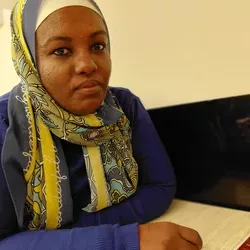
I am a Nubian of the Fedicca tribe. My father’s roots trace back to the village of Ibrim, while my mother comes from Toshka East.
I am a daughter of the third generation of displacement. My grandfather migrated to Cairo in the early twentieth century. We do not know exactly when, nor whether his departure was driven by the heightenings of the Aswan Low Dam or simply the search for work. Nubia at the time was groaning under the weight of extreme poverty, with virtually no employment opportunities for its people.
The sacrifices of the Nubians began to mount from 1902 with the construction of the Aswan Low Dam, followed by its first heightening in 1912 and its second in 1933. This culminated in the harshest displacement of all in 1964, which submerged historical Nubia entirely beneath the waters of Lake Nubia—known officially as Lake Nasser.
Yet it was also thanks to my grandfather’s migration that my father was able to take pride in completing a university education, as did others of the second generation of displacement. He and his brothers became some of the first white-collar Nubians. He went on to serve in the October 1973 war as one of the Nubian soldiers who confounded the enemy by using their native tongue as a military code, rendering Israeli signals intelligence entirely useless.
In 1982, as the complete restoration of Sinai was realized, I was born. From my family’s celebration and that of the rest of the country, the songs of wartime and patriotism remained etched in my memory, echoing the classic line composed by Mohamed Abdel Wahab in 1933 that “loving one’s homeland is a sacred duty to be honored with one’s life.”
From university to the constitutional battle
The daughters of the third generation of displacement were more fortunate in accessing higher education than those of the second generation, many of whom were unable to complete their studies. While in high school preparing for university, my interest in my Nubian roots was awakened when I read “Al-Shammandoura” (The Buoy ), the masterpiece of Nubian literature by Mohamed Khalil Qasim.
I enrolled in the Faculty of Economics and Political Science. During an international relations lecture, the professor was explaining how demographically homogeneous countries formulate foreign policy with ease. One student raised the impact of sectarian crises in Egypt on its relations with the United States; another raised Nubia. The lecturer dismissed Nubians as “those black people who appear as domestic servants in old movies.”
Provoked by his racist response, I countered that Egypt is a melting pot that welds all its people together, and that it is wrong to deny the multiplicity of its cultural sources. Yet I remain angry at that lecturer, who was a prominent figure in the National Democratic Party.
On the other hand, my university studies taught me the concepts of power and its various forms, how the stronger rule and the weaker resist, and the social movements that transform societies. I also learned about the 1992 Declaration on the Rights of Persons Belonging to National or Ethnic, Religious and Linguistic Minorities—the cornerstone for addressing minority issues worldwide, establishing the baseline for state obligations toward them.
After completing my master’s coursework in 2005, I carried what I had studied in my heart and began working at the Cairo Institute for Human Rights Studies (CIHRS) as an academic secretary to its then-director, Bahey Eldin Hassan, one of the pioneers of the Egyptian human rights movement.
During my time there, the Egyptian Nubian novelist and thinker Haggag Oddoul visited us to give a lecture on racism. I remember his gentleness and warmth as he took an interest in me, a fresh graduate taking her first professional steps. From him, I learned that color-based racism is deeply entrenched in society, and that the racism I experienced—compounded by sexual harassment—was a daily struggle faced by every Nubian woman.
Following the January Revolution, I translated my commitment to Nubian affairs into active engagement, joining the Nubian movement through the Democratic Nubian Youth Union. It was an experience that radically altered my perspective on things.
From that vantage point, I passionately followed the work of Manal El-Tibi, the Nubian human rights advocate and director of the Egyptian Center for the Right to Housing, during the 2012 Constituent Assembly. I witnessed how the Muslim Brotherhood targeted her and refused to pass articles securing Nubian rights, culminating in the session where she clashed verbally with Mohamed El-Beltagy and walked out in protest.
The same scenario played out for me the following year, when I participated in the support committee for Haggag Oddoul, the Nubian representative in the Committee of Fifty that drafted the 2014 Constitution, despite the absence of the Muslim Brotherhood. Because I did not wear a headscarf at the time, I was subjected to hostility and bullying—a bitter irony, given that Nubia is historically a matriarchal society.
The right of return
Why this entire preface, weaving together the personal and the public?
The 2014 Constitution specified a ten-year transitional period after which the return of Nubians to their ancestral lands—from which they were displaced during the construction of the High Dam—would be completed. Yet today we find ourselves in the year 2026, two years after the expiration of that transitional period, and the government has not moved a muscle to fulfill this constitutional obligation.
Nubians worked continuously with the Ministry of Transitional Justice to honor this pledge from 2014 until the ministry was abolished in September 2015, and the matter was quietly shelved. That immense effort remains buried in the drawers of the Cabinet.
On the ground, conditions for Nubians have deteriorated day after day. Since 2017, they have been banned from celebrating International Nubian Day on July 7. Furthermore, the lands to which they were supposed to return were designated as restricted military zones closed to settlement or transit, under Presidential Decree No. 355 of 2016 and Presidential Decree No. 444 of 2017.
The neglect of this constitutional entitlement went hand in hand with neglect of another: the establishment of the Anti-Discrimination Commission. Under Article 53 of the Constitution, which guarantees equal opportunity and prohibits all forms of discrimination, whether based on gender, color, race, or geographic origin, this commission was mandated to adjudicate complaints of discrimination, yet remains unenacted.
I grew up as a Nubian acutely aware of the historical role Nubians played in building this country’s diversity. Yet despite this deep indigenous heritage, I, along with many fellow Nubians, face persistent accusations of disloyalty and bad faith for simply demanding our right of return, or insisting on respect for our culture and our distinct ethnic and linguistic identity as an indigenous people of this land.
Some claim that fulfilling our demands will divide Egypt, even though our claims are rooted firmly in the Constitution—the supreme law of the state. We are branded disloyal for holding fast to the 2014 Constitution, which recognized the historical rights of Nubians. Chief among these is Article 236, which established the right of Nubians, as an indigenous people, to return to the shores of Lake Nubia, committing the state to developing the Nubian region in direct partnership with its inhabitants. This right of return remains the cornerstone of all Nubian demands.
An archive of migration and pain
I was fortunate enough to work as a data analyst for the Nubian Heritage Archive, which preserves and indexes documents from the 1933 displacement. There, I examined a vast corpus of correspondence between government officials—from the inspector of the heightening commission and the director of survey, through the undersecretary of public works, up to the British governor.
These documents left me both astonished and dismayed. Nubian beneficiaries were systematically excluded, rarely consulted or included in the record. Crude class divides were laid bare: state officials were meticulously adorned with titles like Pasha, Bey, and Effendi, while the Nubian was routinely referred to as merely “the aforementioned”. Yet on the brighter side, I realized that Nubian women historically possessed financial autonomy and full rights to inheritance—in stark contrast to other regions in Egypt where women are deprived of their land and forced to accept “al-radwa”, a customary settlement coercing them to yield their property to male relatives.
All we ask is respect for a history of migration and pain whose wounds have not yet healed. We also ask for respect for our distinct identity and endangered Nubian heritage, at a time when our language—a primary component of Egypt's intangible cultural heritage—faces the threat of extinction. This highlights the necessity of ideas raised recently regarding the creation of an institute for local languages to teach and preserve the Nubian, Amazigh, Beja, and Domari languages.
All I dream of is respect for my culture and my history. Nubia is a uniquely irreplaceable component of Egypt; if we lose it, we lose an extraordinarily rich piece of our shared heritage. One of my wishes is to see the history of the Twenty-Fifth Dynasty taught in schools—a step I believe has already begun—and to see the Nubian language taught in Nasr El-Nuba city in Aswan and across university departments of language and literature. We stand to lose a great legacy if we fail to preserve both the tangible and intangible heritage of Nubia.
I know these are difficult times since the outbreak of war in Sudan. As a Nubian people, we suffer from escalating racism due to our shared physical features with Sudanese people. Since their displacement to Egypt, the discrimination faced by Nubians has intensified under the false assumption that they are Sudanese. This growing xenophobia grieves me deep inside; it is heart-wrenching behavior that makes life increasingly painful for those subjected to it.
Between the dream of return, the preservation of culture, the protection of heritage, and respect for differences in race, color, and language, Nubians continue to live in the hope that conditions will change. In the face of attempts to question our allegiance or demonize our cause, we affirm once more that we love this homeland. We hold fast to the sentiment we grew up with in the famous theme of the animated series “Bakkar”—that “from the heart and soul, one is Egyptian, with the Nile running through one’s veins.” We are Egyptian citizens, and our citizenship is made complete by protecting and improving the conditions of our lives as an indigenous people who enrich this nation.
Published opinions reflect the views of its authors, not necessarily those of Al Manassa.