

Gaza Journalist Diaries| Living on a thin line
Alienation redefined by post war trauma with no end
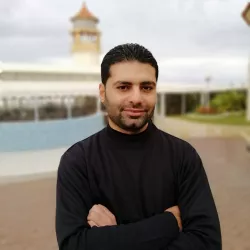
After more than 770 days of multiple forced displacements, my wife Nour and I packed our things and left the eastern edge of the central Gaza Strip. We returned to a dirt road in Gaza City, lined with the rubble of homes destroyed by bombing during the war. We rented an apartment on the fourth floor of a building that had survived, surrounded by tents sheltering displaced families.
When we first got displaced, I spent a full year in those makeshift tents. Then in October 2024, Nour and I moved into a one-story home with a small garden, set among a limited number of houses and lots of trees. It was endurable, except for one flaw—the Israeli occupation army was stationed nearby.
Time and again, we were exposed to shelling and random gunfire as the army laid down covering fire for its troops and vehicles advancing towards our area. But aside from that, it was a home fitted with services that had become rare amid Gaza’s devastation: solar power, decent internet, and water. There were neither tents nor massive destruction around us.
In our new apartment, we lost those basics. Electricity comes for a few hours from a private supplier and costs more than $8 per kilowatt-hour. Water cuts off for days, forcing me to haul heavy containers up the stairs. The elevator does not work—not only because of the power outages, but because its motor was damaged in an Israeli strike that hit the upper floors of the building.
No life as before
When we returned to Gaza City, I told myself we were among the lucky ones. After all, we managed to rent an apartment in a city where most buildings had been bombed—including our original home, which was completely destroyed a year ago.
The apartment is in good condition. I miss our previous house’s small garden, but the sea view makes up for it. I love the sea, and since childhood I have lived close to it. Before the genocide, not a day passed without me sitting in front of it or walking by. It has always been my breathing space—our only escape in Gaza.
In the new home, I tried to settle back in, even if slowly, and I am still trying. But day after day, I felt an ever-widening separation, until at one point I felt I was losing control. I withdrew, partially isolating myself from places, people, and even from work, without really understanding what I was sliding towards. I just surrendered until I realized something was wrong.
A friend who used to live in a neighborhood in northern Gaza City told me that in his old life, his front door was never locked, a family home open to loved ones and neighbors, the way his neighbors’ homes were open to him. He was unsettled by his new life in an apartment building. He struggled to adjust to neighbors who sealed their doors. I was the opposite. I locked our door tightly and welcomed visitors at set appointments.
I’m not complaining. Maybe it’s my own problem, being careful to draw the borders of a private world that pushed me to keep my circle small. Some friends were killed during the war, others fled abroad, and a few stayed. But even those who remained, I could not return to being part of their lives, not because of them, but because of what the war did to our lives—and because I have become more resistant to the surrounding reality, stubborn, and allergic to anything imposed by force.
Someone might ask, what’s new? For a lot longer than two years, more than 2 million Palestinians in the Gaza Strip have been forced into everything they do, from displacement to starvation. But there is a noticeable difference. During this war—when bombing, destruction, and killing were relentless, day after day, week after week, month after month—we thought only about survival. Where we were did not matter, and what we ate did not matter.
Even a war, however long it lasts, holds out the possibility of an end, and with it, the hope of returning to the life that existed before. When I was displaced and the war was raging, even after our home was destroyed, I convinced myself I could adapt, pitching a tent on or beside the rubble.
But when the moment of truth came, when I returned to Gaza in late January 2025—after a six-week truce and more than a year of forced exclusion—I realized the hope was nothing but an illusion. There was nowhere suitable for a tent, no services, and no life.
Even on top of rubble, tents
I spoke with Nour and friends, and all of them said: “if I were in your position and felt like you, I’d kill myself.” I hate the idea of suicide, and I never thought of it. But the conversations pushed me further into isolation.
I searched online, trying to understand what I was going through, to find a name for it, to help myself connect to our reality after two years of a genocide. It still affects every detail and will stretch into the coming years, which may—just may—include some social recovery, reconstruction, and development.
While searching, I found a precise description: I am living in a state of alienation in my city, Gaza. As an individual in a society that has been subjected to genocide and is still living with its aftermath, I have become a stranger—or that’s how it feels.
The genocide changed the city’s landmarks, turning concrete buildings into mounds of rubble, ringed by tents on every side. Even on top of the rubble, there are tents. Streets that were once paved with asphalt are now covered with tents, dirt, and debris that we walk over.
Even the society we knew, with its customs and traditions, has changed. Local communities—each with its own culture and way of life shaped by the environment and by the people of every city, and camp—have been thrown together.
In an article published on the website Mawdoo3 titled “The Concept of Alienation,” writer Ghada Al-Halaika listed three basic pillars that define alienation’s dimensions. It helped me understand, more precisely, what I am facing.
The first is the sensory dimension, where a struggle takes place between the individual and social, economic, and political forces in an attempt to form a stance toward everything happening around them. A person feels alienated when that stance cannot be achieved, she wrote, and “feels stripped of self and consumed.”
That is exactly what I am wrestling with; every local, regional, and international force competing over our future, on every level and in every aspect.
International conflicts have been in motion since US President Donald Trump announced his plan, which appears designed to secure future personal economic gain for him. Regional countries are competing according to their political interests and, perhaps, their future military fears.
As for the Palestinian parties, they are still fighting each other over future rule, and each side presents itself as the best option—not for the Palestinians, but to implement international and regional agendas and interests.
As Palestinian citizens, it is clear that we are at the bottom of everyone’s list: strangers on our own land, expected to accept what the world decides for us—to hear, obey, and submit.
The third dimension of alienation is the metaphysical dimension. Here, the individual ignores the surrounding reality and searches in the world of metaphysics for the truth of their existence and the universe’s stance towards them. Here, doubt comes between a person's perception and what they are actually living. I don’t think I have gone deeply into that part yet, but if this alienation continues without a real integration into life, I believe it will become more painful and have more profound psychosocial effects.
Al-Halaika’s second dimension of alienation concerns the individual’s search for a “world of ideals” after the world that shaped their personality has been crushed. They take flight in imagination, proposing a spiritual foundation for humanity in place of a lived, material reality.
The conflict between the imaginary and the real intensifies until everything around them feels like chains that no relationship or social connection can free them from.
This produces isolation, then alienation from the values that once governed life.
The genocide crushed our previous life in every detail, distorting ideas and beliefs until I found myself living inside an imagined future. That is where I need to start from now, finding a way to live with the reality in front of me, without clinging to a past that will not return.
As for the future, it is what I decide, whether I will search for individual salvation elsewhere or adapt to what is available, according to the political and economic developments that will be imposed under international and regional visions.
Alienation, as I have come to describe my state of being, has trapped me between longing for both a recent past and an imagined, hoped-for future, under an imposed present. Between the two, I balance on a wire. If it snaps, I fall into the abyss. If I adapt, maybe I survive.
But will my soul survive with me?
Published opinions reflect the views of its authors, not necessarily those of Al Manassa.