
Egypt’s parliament delays vote on El-Sisi’s Saudi defense mandate
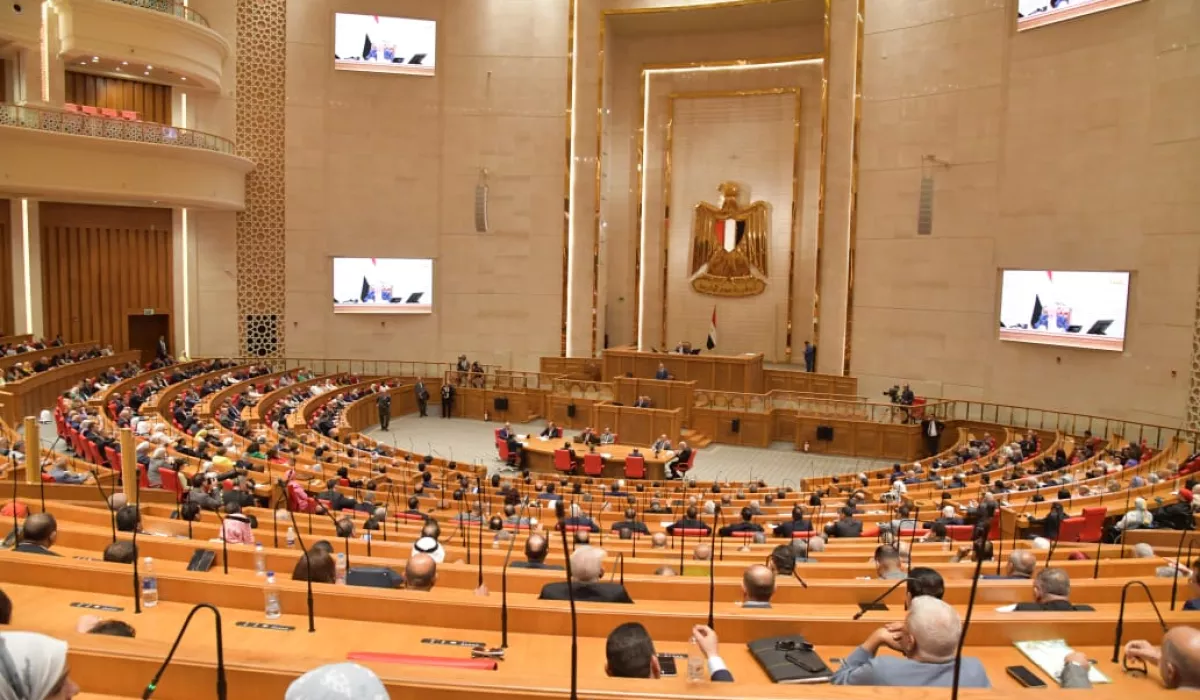
Egypt’s parliament has put off a vote on authorizing President Abdel Fattah El-Sisi to deploy forces in defense of Saudi Arabia, which had been expected this week, adjourning a closed-door session amid a small but growing number of abstentions and open objections. The House of Representatives will reconvene next Monday to decide.
The vote will be held by roll call and requires a two-thirds majority, about 397 of the chamber’s 596 members, according to two MPs who attended the session. Both spoke to Al Manassa on condition of anonymity to avoid being referred to the House Ethics Committee.
The session started two hours late, at 3 pm, because the House speaker was attending the opening of the Egypt 2026 Forum. Debate on whether to send Egyptian troops into a regional war then lasted about an hour and a half, the first MP said.
In that time, more members added their names to the list of abstentions, while others objected outright. Among them were Zakaria Hassan, deputy head of the Religious Affairs and Endowments Committee, and Maha Abdel Nasser of the Egyptian Social Democratic Party, whose 11-member bloc said on Sunday it would abstain.
Abdel Nasser pressed for a diplomatic end to the conflict and refused to hand the president what she called an “open-ended and vague” mandate, a pointed reference to the wording of the request sent to the House, the source said.
Ahmed Farghaly, a member of the Economic Affairs Committee, also declared his opposition, pointing to Egypt’s fragile economy and the cost in soldiers’ lives. He warned that entering the war could hurt the Suez Canal and the wider economy, according to the first source.
The sources said one of the unexpected endorsements came from Atef Maghawry, who leads the leftist Tagammu Party’s parliamentary bloc. Maghawry backed authorizing El-Sisi to send troops to Saudi Arabia, while also asking that the president be mandated to pursue a diplomatic resolution.
El-Sisi asked parliament on Saturday to convene in an emergency session and authorize military action to protect Saudi Arabia’s security and borders, should the kingdom request it, as fighting between Riyadh and Yemen’s Houthis escalates.
“We stand firmly, with full support, to protect and defend the lands of our brothers in the Gulf,” he said at the graduation of the Egyptian Military Academy’s first class. He then addressed the Saudi leadership directly: “In Egypt, in accordance with the directives of King Salman and Crown Prince Mohammed bin Salman, we will carry out any measure to protect you and defend you.”
Article 152 of the constitution bars the president from declaring war or sending the armed forces on a combat mission abroad without first consulting the National Defense Council and winning the approval of two-thirds of the House.
Outside parliament, several political groups also voiced objections on Monday. The Socialist Popular Alliance Party rejected outright the dispatch of any Egyptian forces to Saudi Arabia, arguing that “Egypt today needs, more than ever, to ensure its army is ready to confront the direct threats to its security on all its borders.”
The Hope Current Party, which is still being established, urged the authorities to spare Egyptians “the horrors of military entanglement in the conflict between Saudi Arabia and Yemen.” Reducing Egypt to “siding with one party against another,” it said in a statement, “is inconsistent with Egypt’s historic standing, its leading role, its popular and political weight, and its regional stature.”
The Civil Democratic Movement, an opposition coalition, rejected the involvement of Egypt’s armed forces in any regional war on behalf of any side. “Egyptian national interests must be the primary determinant of any decision on this matter,” it said, adding that it rejects “Egypt’s position being tied to directives from any external party,” language that echoed, and appeared to answer, El-Sisi’s own.
The movement’s coordinator, Akram Ismail, told Al Manassa a statement would follow within 48 hours. “We favor caution, and a diplomatic role for Egypt,” he said, warning that sending troops abroad “drags us into a war nobody knows how it will end.”
Medhat El-Zahed, a veteran journalist and leader of the Socialist Popular Alliance Party, also opposed authorizing the army to fight abroad, telling Al Manassa it risked dragging Egypt into a regional conflict with no foreseeable end.
El-Zahed acknowledged that Gulf security is tied to Egypt’s own interests in the Red Sea and Bab Al-Mandeb, and to the threats facing Suez Canal shipping. But protecting those interests, he argued, demands more diplomacy and mediation, not military involvement. They “place a responsibility on us to intensify and energize our diplomatic and political efforts to protect our vital interests,” he said.
He also criticized what he described as Riyadh’s brush-off of an Egyptian proposal for a joint Arab force in 2015, before Saudi Arabia launched Operation Decisive Storm in Yemen.
In September, the Associated Press reported that Saudi Arabia had asked Egypt, France, Britain and Pakistan for defensive support against Houthi missiles and drones, as it ran short of interceptors and Washington grew less willing to intervene directly. The report came a day after Crown Prince Mohammed bin Salman visited Cairo on Sept. 15 for talks with El-Sisi on regional developments and Red Sea security. Neither side disclosed any new military arrangements at the time.