
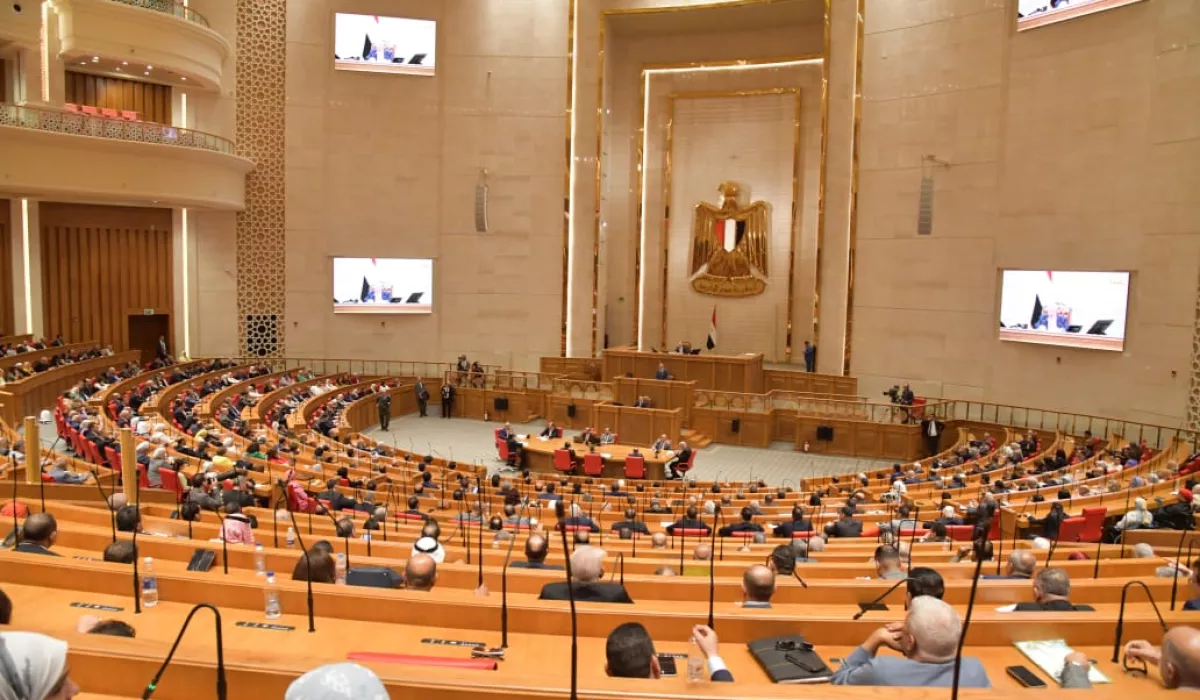
Parliament approves new lineup for Human Rights Council
Egypt’s House of Representatives on Monday approved a new 25-member National Council for Human Rights, pending presidential ratification and publication in the Official Gazette.
Under the amended law governing the council, lawmakers nominate and approve the president, vice president and members for up to two four-year terms, before the president issues a decree to formalize the appointments. The council’s mandate includes monitoring human rights, receiving complaints, issuing reports and recommendations, and conducting visits to detention facilities with reports sent to the public prosecutor and parliament.
Former assistant foreign minister for human rights and international social affairs Ambassador Ahmed Ehab Gamaleldin was appointed as council chair. He replaces Ambassador Mahmoud Karem, who had been acting chair through the end of the last term after Ambassador Moushira Khattab submitted her resignation on May 31, 2025.
Politician Mohamed Anwar El-Sadat, head of the Sadat Association for Development, was named vice chair.
The new formation retains Ahram Weekly editor-in-chief and journalist Ezzat Ibrahim, Arab Organization for Human Rights head Alaa Sayed Kamel Shalaby, and Saeed Abdel Hafez, head of the Forum for Development and Human Rights Dialogue.
Leaving the council are human rights lawyer Nehad Abo El Komsan, along with Noha Talaat Abd Elkawy, the council’s social rights committee secretary, and human rights lawyer Essam Shiha.
New members include Ayman Abdel Wahab, head of Al-Ahram Center for Political and Strategic Studies; journalist Gamal Maher Hassan, editor-in-chief of Al-Ahram Al-Arabi magazine; and Khaled Zakaria, an economics professor at Cairo University who heads the Macroeconomic Policies Center at the Institute of National Planning.
Last December, the National Council for Human Rights issued its 18th annual report on the state of human rights in Egypt from July 2024 through June 2025, describing “progress” on legislation, presidential pardons and economic rights while citing “ongoing challenges” in public freedoms and criminal justice, and casting its findings as a “balanced” assessment that praised new laws, including the Criminal Procedure Law and legislation regulating asylum and labor, while saying several areas still require reforms and interventions to improve human rights conditions.